
Brooklyn · Neighborhood guide
Vinegar Hill
Vinegar Hill’s small groups of nineteenth-century houses sit near former industrial buildings and the Brooklyn Navy Yard. Hudson Avenue and Front Street show a waterfront neighborhood built over several periods, with residential and industrial uses side by side.

Clyde Charles Brown · CC BY-SA 4.0 · Resized.

About Vinegar Hill
Shipbuilder John Jackson established a yard near today’s Hudson Avenue and built nearby housing for workers. In the early nineteenth century he sold land to the federal government for the Brooklyn Navy Yard and built more housing for its personnel.
By the late nineteenth century, the area was a dense residential and industrial neighborhood. Its many Irish residents contributed to the name Irishtown, while residents of other backgrounds also lived there. Later bridge construction and industrial expansion replaced many smaller dwellings.
Places to explore
Hudson Avenue historic streets
Hudson Avenue near Plymouth and Water streetsThe historic district includes early houses associated with Jackson and his heirs as well as later houses with Greek Revival and Italianate features. Compare the fronts from the sidewalk; these are residential buildings.
Former Constitution Engine Company firehouse
225–227 Front Street, between Bridge and Gold streetsThe Italianate firehouse was built around 1855–56, enlarged in 1903 and converted to residential use in 1976. Its former engine entrance and bracketed cornice are features to notice from outside.
Former Benjamin Moore factory
231–233 Front StreetThe six-story factory was developed by the paint company in 1908. It interrupts the lower row-house scale of the same historic block. Treat it as an exterior architectural stop.
Front Street row houses
North side of Front Street between Bridge and Gold streetsThe historic district includes Greek Revival houses beside the former firehouse and factory. Look at the different building scales along the block and keep residential entrances clear.
Planning a visit
York St on the F is an arrival point west of the historic streets. Check current MTA service before traveling and use the public sidewalks for the architectural stops.
The historic district consists of separate groups of buildings rather than one continuous visitor site. Its houses and the former firehouse are residential; do not assume access to their interiors.
Photos
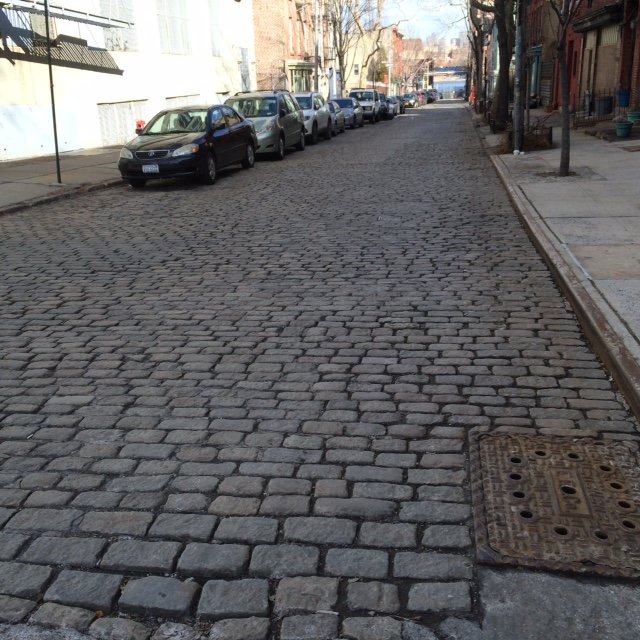
Mariamkamagate · CC BY-SA 4.0 · Resized.

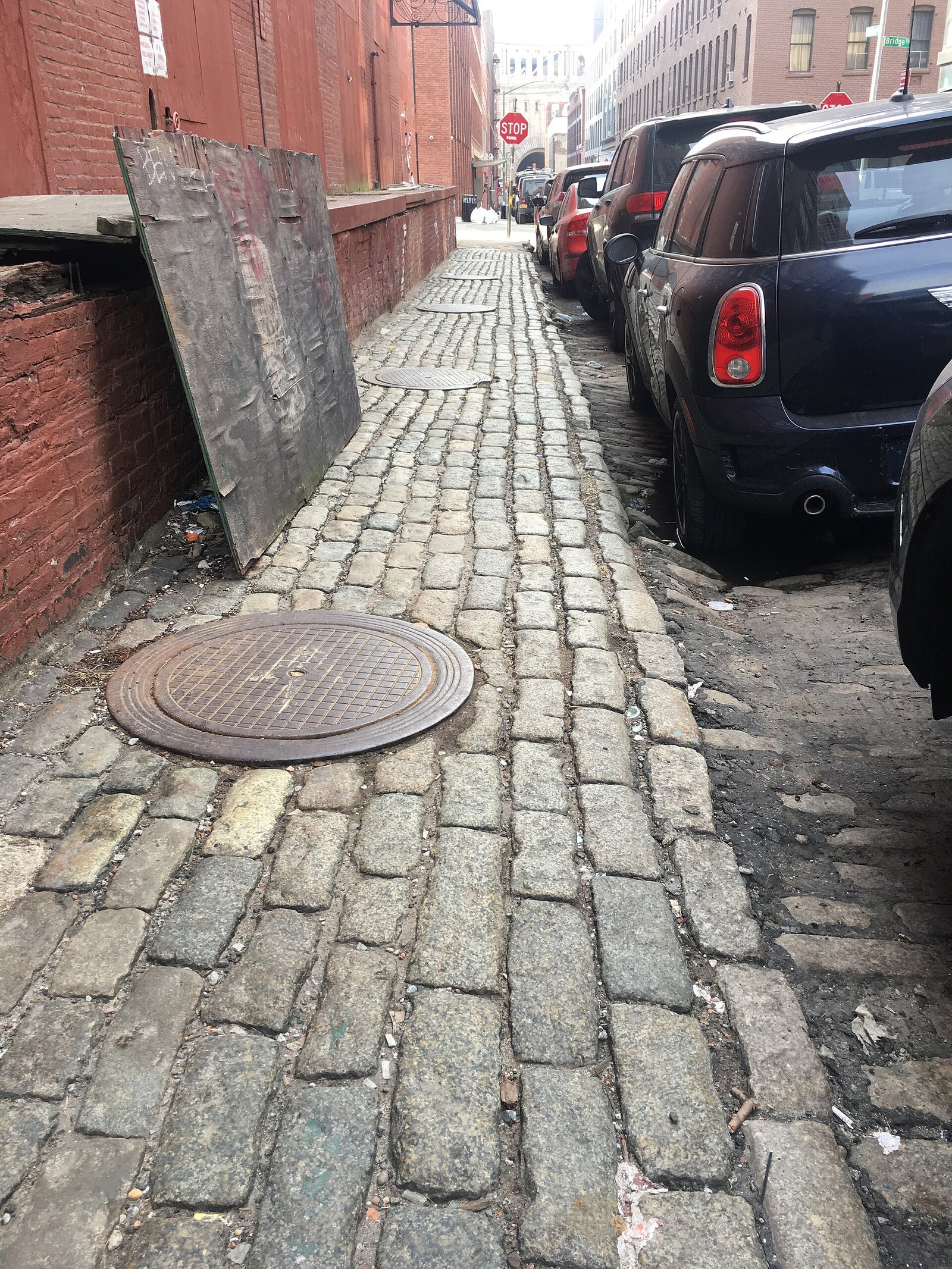
Cmcm1205 · CC BY-SA 4.0 · Resized.

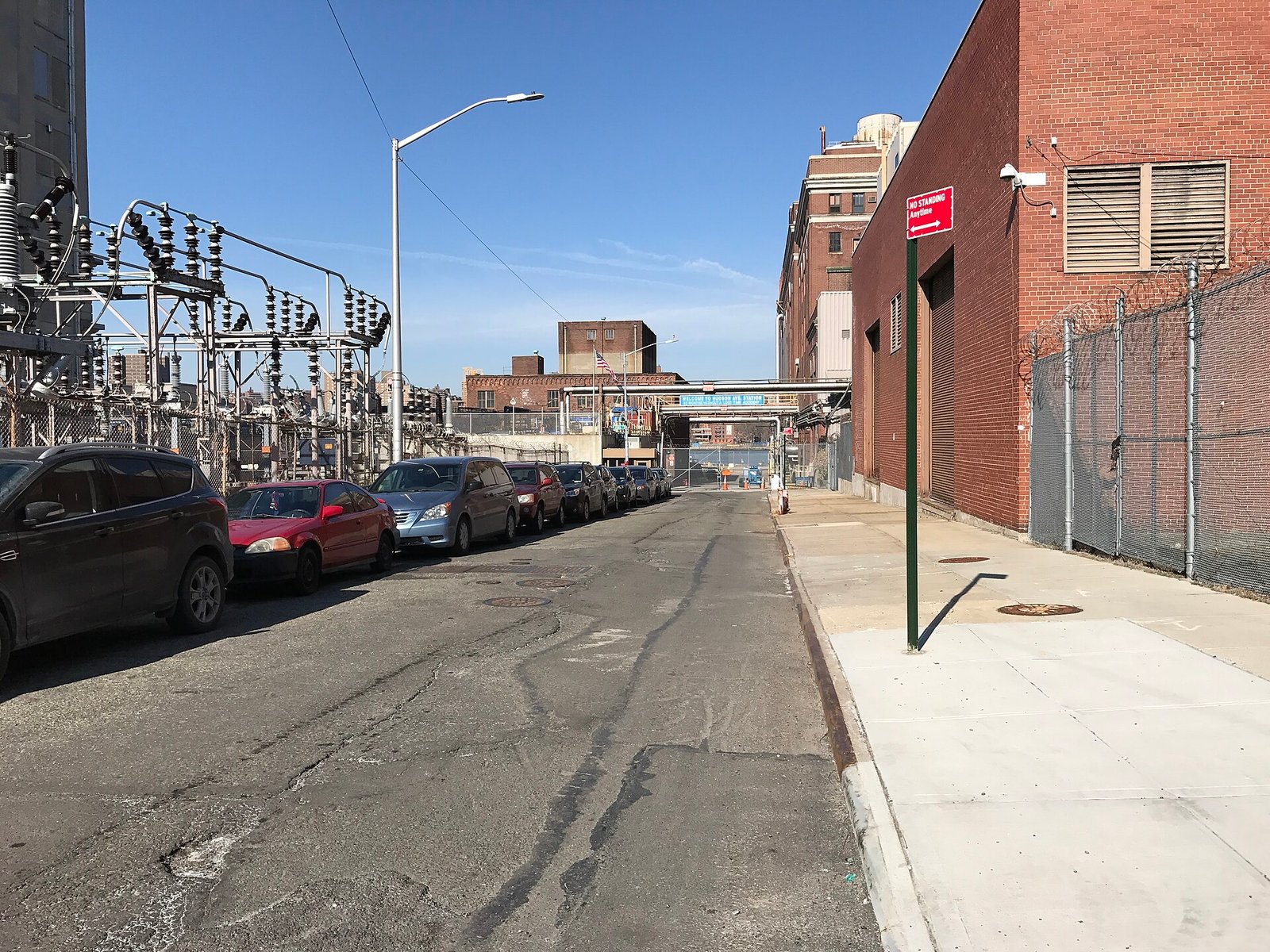
Jeferson820 · CC BY-SA 4.0 · Resized.

Sources and visitor information
- F train line mapMetropolitan Transportation Authority
- 251 Front Street environmental assessmentNYC Department of City Planning
- Vinegar Hill Historic District designation reportNYC Landmarks Preservation Commission