
Brooklyn · Neighborhood guide
Cobble Hill
Cobble Hill’s nineteenth-century streets bring Greek Revival houses, later Italianate fronts and early housing reform projects into a compact part of Brooklyn. Cobble Hill Park and the small houses of Warren Place give two different views of the neighborhood’s residential history.

Aaron Barlow · CC BY-SA 4.0 · Resized.

About Cobble Hill
Ferries and South Brooklyn’s growing waterfront helped turn the area into a residential neighborhood during the nineteenth century. The historic district records successive building styles rather than a single uniform row-house design. Changes in doorways, rooflines, ironwork and window surrounds make those periods visible from the street.
Housing reform is another part of the story. In the 1870s, philanthropist Alfred Tredway White developed the Home and Tower buildings and the Warren Place cottages to provide better housing for working people. The larger buildings and the small courtyard houses offered different alternatives to the crowded tenement.
Places to explore
Cobble Hill historic streets
Clinton, Henry and Congress streetsLook at the proportions of Greek Revival entrances and the more elaborate brackets and decoration of later houses. The district’s block-by-block report is useful for choosing a few facades to compare. Occupied homes are exterior stops.
Cobble Hill Park
Clinton Street at Verandah PlaceNeighborhood campaigns helped secure this land for a park rather than new development. Dedicated in 1965 and reconstructed in 1989, it uses brick, stone and ironwork that relate to the surrounding streets. The park is a twentieth-century addition to an older neighborhood.
Warren Place cottages
Between Warren and Baltic streets, west of Henry StreetTwo rows of narrow houses face a shared garden court. The arrangement was part of White’s housing reform work. Look from the public street entrances; the courtyard and homes are private.
Cobble Hill Towers
Hicks Street at Baltic StreetThe Tower Buildings show the larger-scale side of White’s housing projects. Repeated brick arches and open galleries distinguish them from the nearby row houses. See the exterior from the sidewalk rather than entering residential courts.
Planning a visit
Bergen St on the F and G is an arrival point east of Court Street, with entrances along Smith Street at Bergen, Warren and Wyckoff streets. Check MTA service notices for changes before traveling. Choose your stops from the historic streets and park rather than treating the whole district as a museum with public interiors.
Cobble Hill Park is the public open-space stop in this selection. Warren Place and the Towers remain residential places. Use public sidewalks for the architectural stops and leave their gardens, doorways and courts clear.
Photos
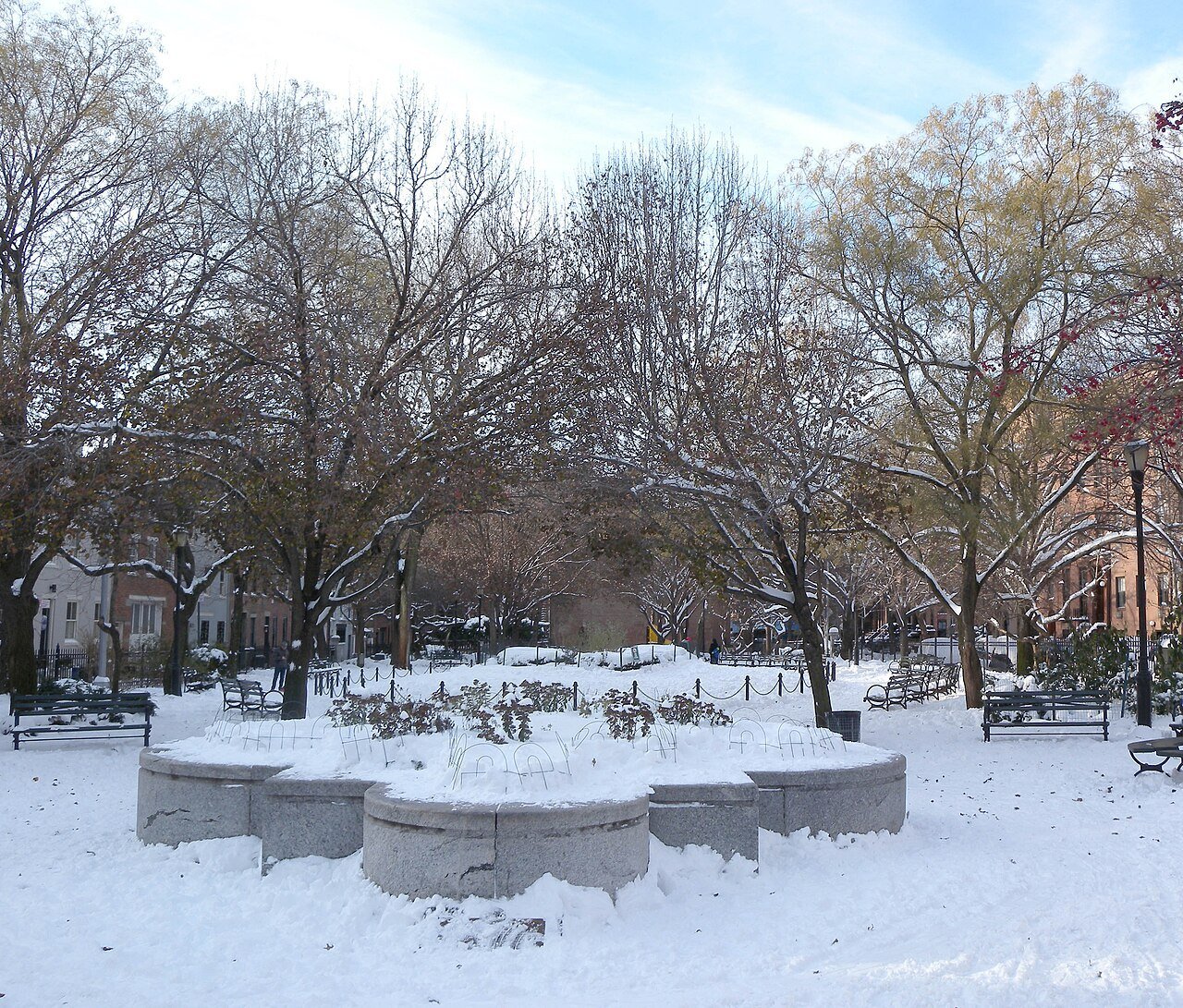
Jim.henderson · CC0 · Resized.

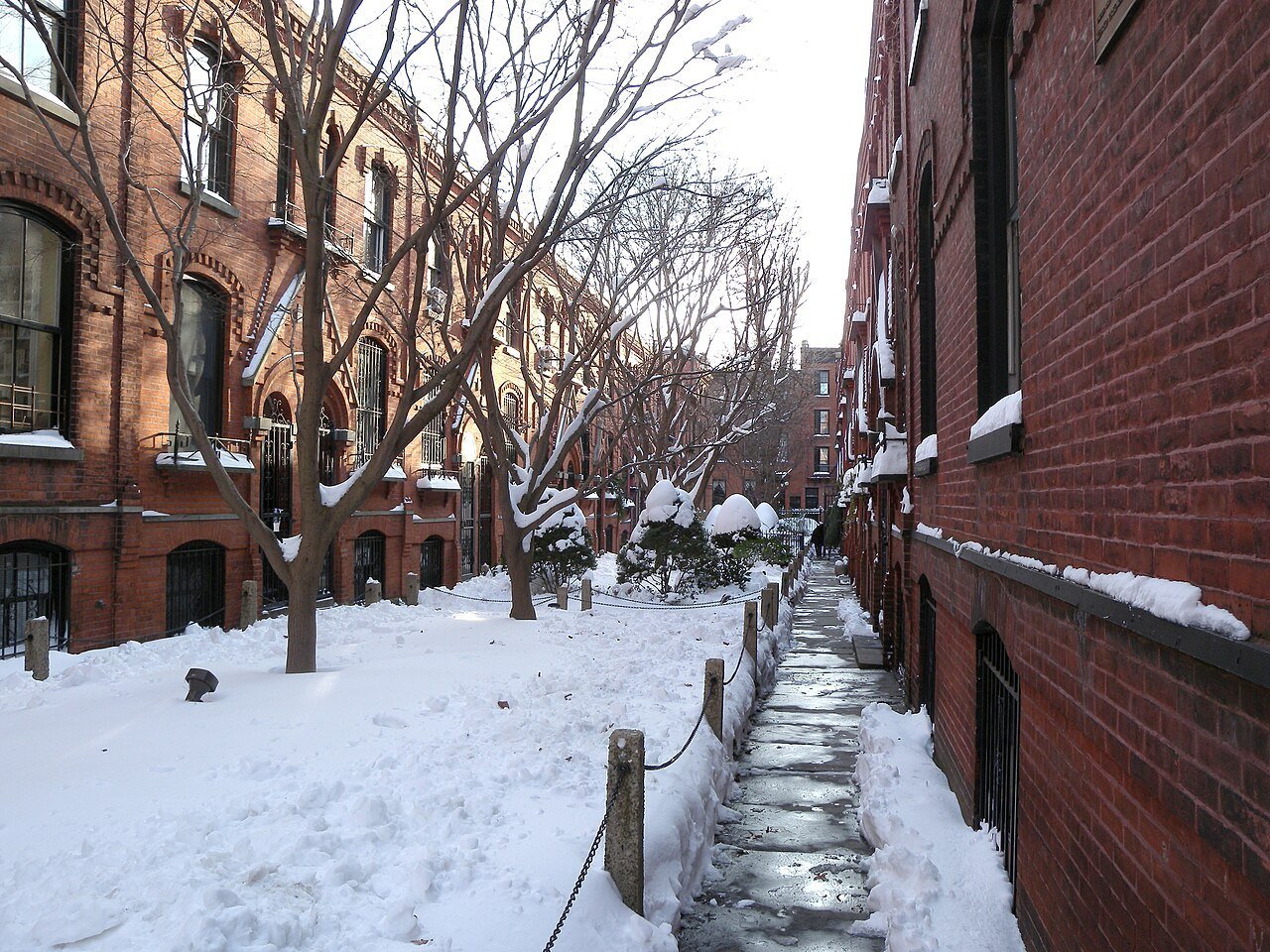
Jim.henderson · CC0 · Resized.

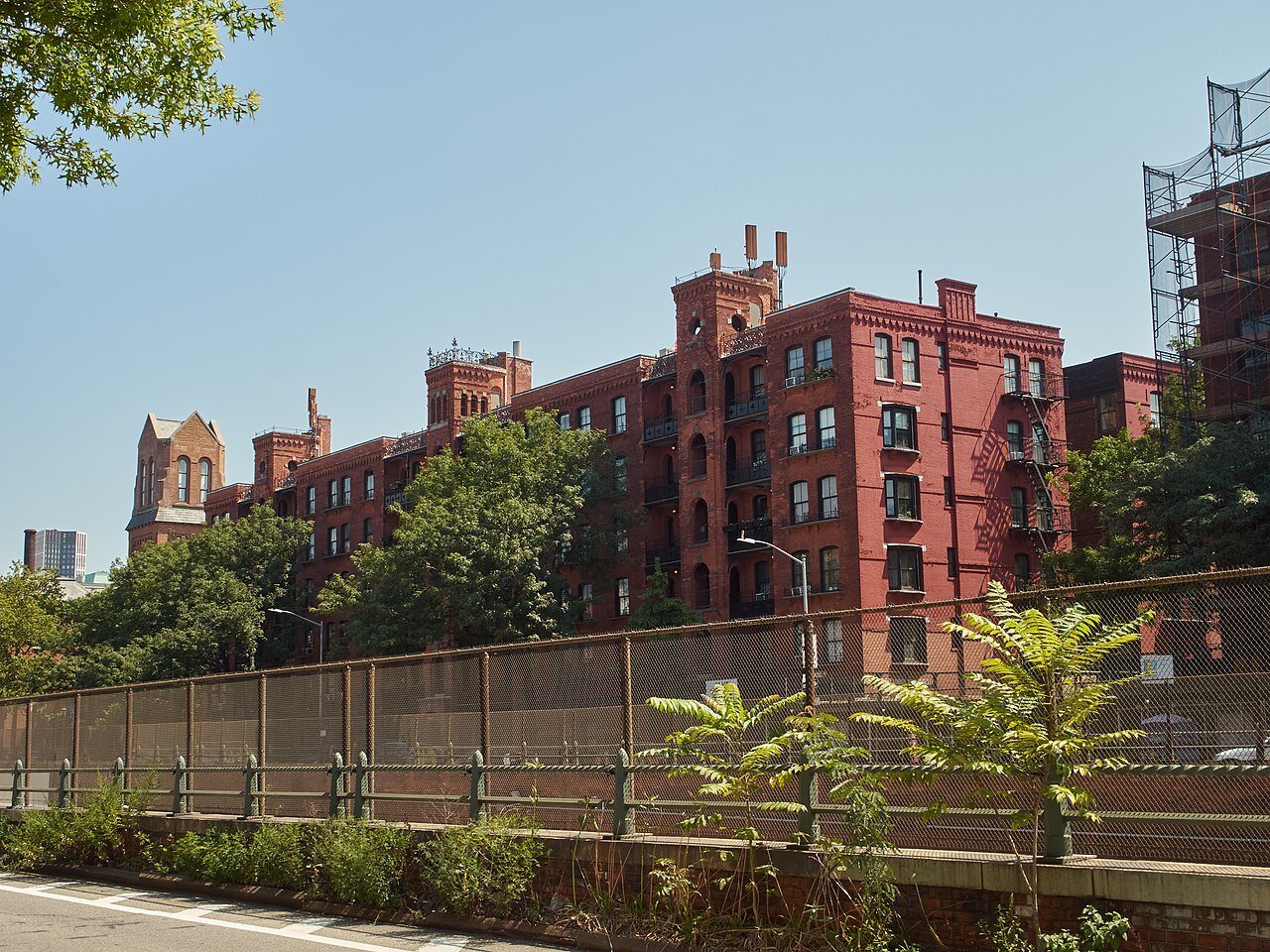
Tmcw · CC BY-SA 4.0 · Resized.

Sources and visitor information
- Cobble Hill Historic District designation reportNYC Landmarks Preservation Commission
- A brief history of Cobble HillCobble Hill Association
- F train line map and station entrancesMetropolitan Transportation Authority
- G train line map and station entrancesMetropolitan Transportation Authority
- 2020 Neighborhood Tabulation Areas, version 26BNYC Department of City Planning / NYC Open Data
- Cobble Hill Association by-laws: boundariesCobble Hill Association